Search

Part 2: Managing Non-Multiple Sclerosis Patients in a Multiple Sclerosis Practice: Rare Neuroimmunological Disorders – Everything You Need to Know Symposium

Presented by 

Daniel Reich, MD, PhD
Activity Overview

Year

2026

CREDIT HOURS

0.75

CREDIT/S AVAILABLE

AAPA, ACPE, ANCC, APA, ASWB, CME, RD, IPCE, Certificate of Completion

Level of Information

Basic, Intermediate

Duration

Course Duration: 2h56m

Track/s

Categories 2026, MS Management
$97.00

About This Activity

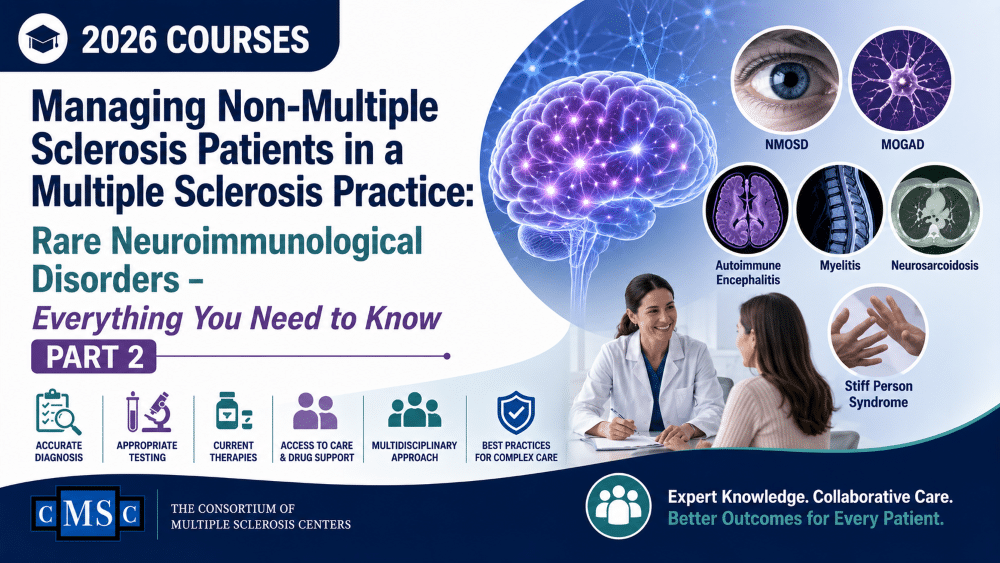
This session introduces participants to the biologic and clinical basics of rare neuroimmune conditions, including neuromyelitis optica spectrum disorder (NMOSD), MOG antibody-associated disease (MOGAD), autoimmune encephalitis, myelitis, neurosarcoidosis, and stiff person syndrome. Participants learn about diagnostic criteria, appropriate testing, and current therapeutic options. The session reviews access to care and drug access programs and emphasizes a multidisciplinary approach to care while discussing best practices for the management of these complex conditions.

Target Audience

  • This activity has been designed to meet the educational needs of physicians, advanced practice clinicians, nursing professionals, pharmacists, psychologists, social workers, rehabilitation specialists, dietitians, researchers, advocates, and other members of the healthcare team involved in the management of patients with MS.

Learning Objectives

  • Compare MS models of care in order to support the provision of team-based, comprehensive care via the most appropriate model for a given practice setting that appropriately incorporates roles and responsibilities of clinicians and ensures the delivery of evidence-based MS care.
  • Summarize methods to monitor treatment outcomes including patient self-report, automated self-assessment, data from wearable devices, clinician reported outcomes, imaging, and biomarkers in order to optimize their utilization in clinical practice and research.
  • Identify assessment techniques to isolate those factors that affect the complex pathology of MS and related neuroimmune disorders and differentiate between these disease processes and their manifestations and course.
  • Analyze common symptoms of MS and related disorders and their appropriate pharmacologic and non-pharmacologic interventions in order to develop strategies designed to maximize function and quality of life.

Course Content

Managing Non-Multiple Sclerosis Patients in a Multiple Sclerosis Practice: Rare Neuroimmunological Disorders – Everything You Need to Know Part 2

  • AQP4 NMOSD and MOGAD
  • Neurosarcoidosis: Translating an Enigmatic Disease
    33:32
  • Expanding Clinical Profiles of Stiff Person Syndrome Spectrum Disorders
    47:10
  • Disease Modifying Therapies for NMO, MOGAD, Sarcoid and SPS
    49:30