
Search

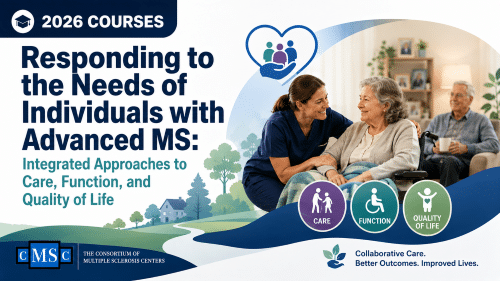
Responding to the Needs of Individuals with Advanced MS: Integrated Approaches to Care, Function, and Quality of Life Symposium

Presented by 

Daniel Reich, MD, PhD
Activity Overview

Year

2026

CREDIT HOURS

2.75

CREDIT/S AVAILABLE

AAPA, ACPE, ANCC, APA, ASWB, CME, RD, IPCE, Certificate of Completion

Level of Information

Advanced

Duration

Course Duration: 2h25m
$97.00

About This Activity

People living with advanced multiple sclerosis (MS) experience increasing disability, complex symptom burden, and heightened risk of fragmentation or disengagement from care at a time when coordinated support is essential. With the field’s emphasis on disease modification and disability prevention, optimal management of people living with significant disability receives disproportionately less attention. As treatment options narrow for these patients, both patients and clinicians may encounter uncertainty and shifts in care goals, underscoring the need for thoughtful, interdisciplinary approaches tailored to this stage of the condition.

This symposium highlights opportunities to strengthen therapeutic relationships and sustain engagement in care as an individual’s condition, needs, and available clinical options evolve. Panelists discuss ways to reframe clinical success beyond disease stabilization, emphasizing autonomy, dignity, and the intentional preservation of joy and meaning despite advanced disease.

An expert panel specializing in advanced MS presents practical, interdisciplinary approaches to complex symptom management, prevention of secondary complications, and preservation of function. Cognitive and psychosocial challenges that contribute to isolation and diminished quality of life, as well as the critical role of caregivers, are also discussed.

Through interdisciplinary, case-based discussion, the session equips clinicians with practical tools to deliver person-centered care that supports both the clinical complexity and lived experience of individuals with advanced MS. This advanced-level session is designed for clinicians seeking to deepen their expertise in delivering person-centered, interdisciplinary care for individuals with advanced MS.

Target Audience

  • This activity has been designed to meet the educational needs of physicians, advanced practice clinicians, nursing professionals, pharmacists, psychologists, social workers, rehabilitation specialists, dietitians, researchers, advocates, and other members of the healthcare team involved in the management of patients with MS.

Learning Objectives

  • Compare MS models of care in order to support the provision of team-based, comprehensive care via the most appropriate model for a given practice setting that appropriately incorporates roles and responsibilities of clinicians and ensures the delivery of evidence-based MS care.
  • Summarize methods to monitor treatment outcomes including patient self-report, automated self-assessment, data from wearable devices, clinician reported outcomes, imaging, and biomarkers in order to optimize their utilization in clinical practice and research.
  • Conduct a thorough patient assessment that allows for differentiation between mental health, psychosocial, and cognitive issues in MS and incorporates information obtained into therapeutic plans of care.
  • Identify professional and community resources that support the work of the mental health team in providing comprehensive care that monitors for changes in quality of life and promotes optimization.
  • Integrate rehabilitative strategies into the multidisciplinary management of the comorbidities and sequelae of MS to optimize patients’ function and quality of life.
  • Identify MS-specific screening techniques that facilitate individualized and targeted rehabilitation services.
  • Recognize the importance of focusing on wellness outcomes and incorporate this perspective into all clinical care and patient and family education.
  • Integrate wellness concepts into long-term planning as the patient condition changes to optimize wellness strategies at all stages of disease.

Course Content

Responding to the Needs of Individuals with Advanced MS: Integrated Approaches to Care, Function, and Quality of Life

  • Introduction: Framing Advanced MS
    09:42
  • Medical Management: Preserving Function & Reducing Symptoms
    38:50
  • Assistive Technology to Maximize Function, Mobility and Health in Advanced MS
    36:47
  • Protecting Health in Advanced MS: Preventing and Treating the Most Common Complications
    37:20
  • The Power of Peer Connections & Caregiver Support: Improving Outcomes and Sustaining Joy
    23:08